Rinjani 2-Day Trek: Can You Really Summit in 48 Hours?
Mount Rinjani, a majestic stratovolcano on the island of Lombok, Indonesia, beckons trekkers with its breathtaking caldera, turquoise crater lake (Segara Anak), and the exhilarating challenge of reaching its summit at 3,726 meters above sea level. For many, the allure of Rinjani is undeniable, but time constraints can be a significant factor. This leads to a common question: is a 2-day Rinjani trek, summiting in approximately 48 hours, truly feasible? And if so, which route, Senaru or Sembalun, is the better choice for such an ambitious undertaking?
The 2-Day Rinjani Trek: A Glimpse of the Possible
Let's address the elephant in the room: a 2-day Rinjani summit trek is an extremely challenging and demanding undertaking. It is not recommended for beginners or those not in peak physical condition. This condensed itinerary prioritizes speed and efficiency, often involving very early starts, long trekking hours, and minimal rest. While it is technically possible to reach the summit within a 48-hour window, it comes with significant trade-offs and should only be attempted by experienced, well-prepared trekkers.
The typical Rinjani trekking packages range from 3 to 4 days, allowing for a more comfortable pace, time to enjoy the scenery, and sufficient rest. A 2-day trek essentially compresses these experiences into a highly condensed timeframe. This means that the focus is solely on reaching the summit and descending, often sacrificing the opportunity to fully explore the crater lake or hot springs.
Senaru vs. Sembalun: Choosing Your Starting Point
The choice of starting point significantly impacts the Rinjani trekking experience, especially for a shorter trek. The two primary entry points are Senaru and Sembalun. Each offers a distinct trail profile and challenges.
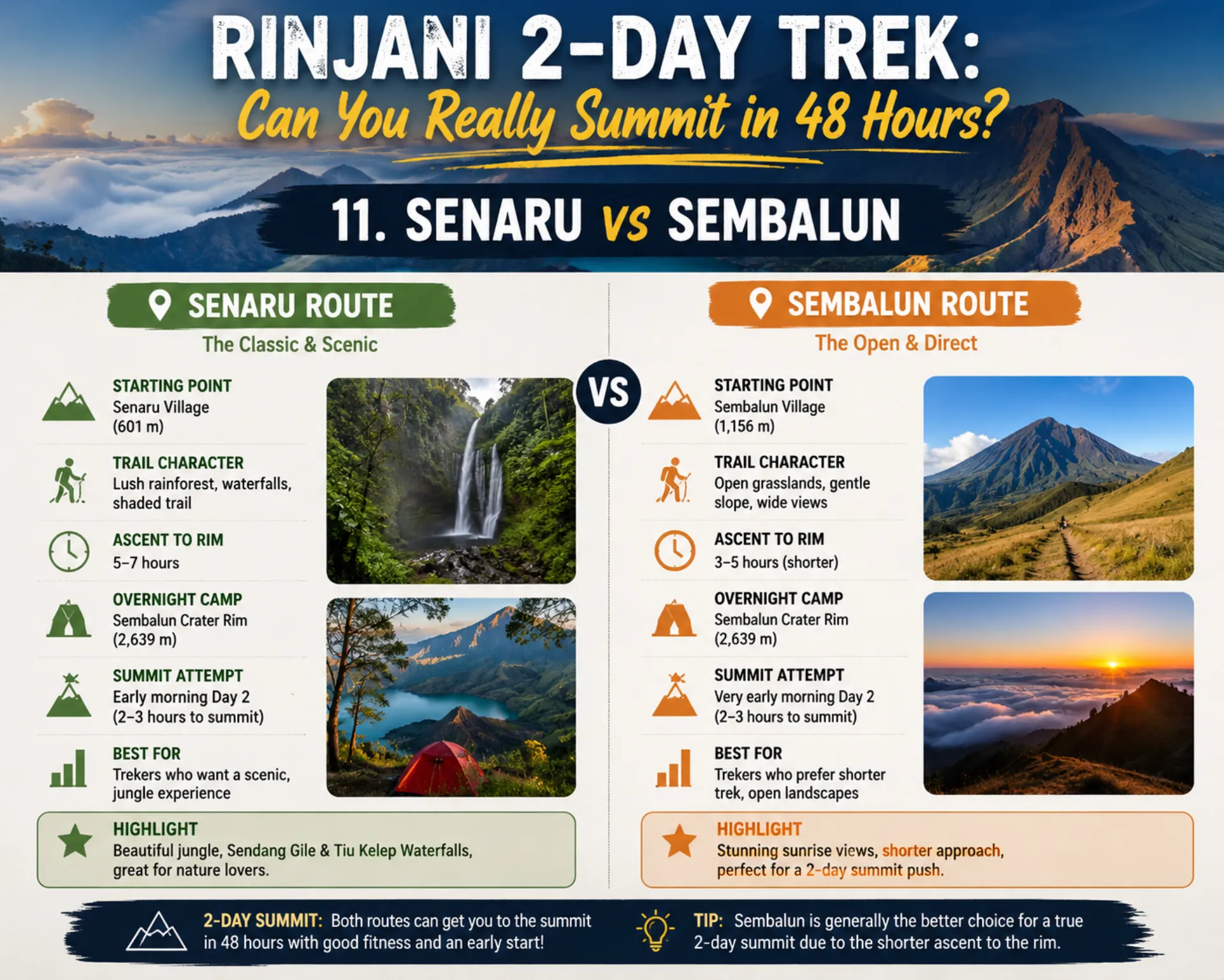
11. Senaru Route: The Shorter, Steeper Climb
The Senaru route is generally considered the shorter of the two main trekking paths to the summit. However, this brevity comes at the cost of steeper ascents and a more challenging climb, particularly on the final push to the summit.
Senaru Route: Key Characteristics
- Starting Elevation: Approximately 600 meters.
- Trek Duration (Standard): Typically 3 days/2 nights.
- Summit Difficulty: The final ascent from the crater rim to the summit is very steep, loose, and demanding.
- Scenery: Offers lush rainforest, waterfalls (like Sendang Gile and Tiu Kelep near the start), and beautiful jungle landscapes.
- Crater Rim: The trek reaches the Senaru crater rim (Pelawangan Senaru) which offers stunning views but is not the highest point.
- Summit Access: To reach the summit from Senaru, you must descend into the caldera, trek across to the other side, and then ascend to the summit. This makes a direct 2-day summit from Senaru highly improbable and not a standard itinerary.
Senaru for a 2-Day Trek? Highly Unlikely for Summit
Attempting to summit Rinjani in 2 days starting from Senaru is practically impossible and not a recognized trekking itinerary. The path to the summit from Senaru involves a significant descent into the caldera and then a long traverse and ascent to the actual peak. This is a journey that requires at least 3 days to complete comfortably, even for experienced trekkers.
11. Sembalun Route: The Longer, Gradual Ascent
The Sembalun route, on the other hand, is longer in terms of distance but offers a more gradual ascent, making it the preferred choice for those aiming for the summit, especially on a condensed schedule. The landscape is also quite different, characterized by rolling hills and savanna.
Sembalun Route: Key Characteristics
- Starting Elevation: Approximately 1,150 meters.
- Trek Duration (Standard): Typically 2 days/1 night to the summit and back to Sembalun, or 3 days/2 nights to include crater lake exploration.
- Summit Difficulty: The ascent to the summit from the Sembalun crater rim is long and exposed, with loose scree, but less vertically steep than the final push from the Senaru side.
- Scenery: Features open grasslands, rolling hills, and expansive views across Lombok.
- Crater Rim: The trail leads to the Sembalun crater rim (Pelawangan Sembalun), which is at a higher elevation and closer to the summit path.
- Summit Access: From the Sembalun crater rim, the summit is a direct, albeit strenuous, climb.
Sembalun for a 2-Day Summit Trek: The Only Realistic Option
If you are determined to attempt a 2-day Rinjani summit trek, the Sembalun route is your only viable option. This itinerary typically involves:
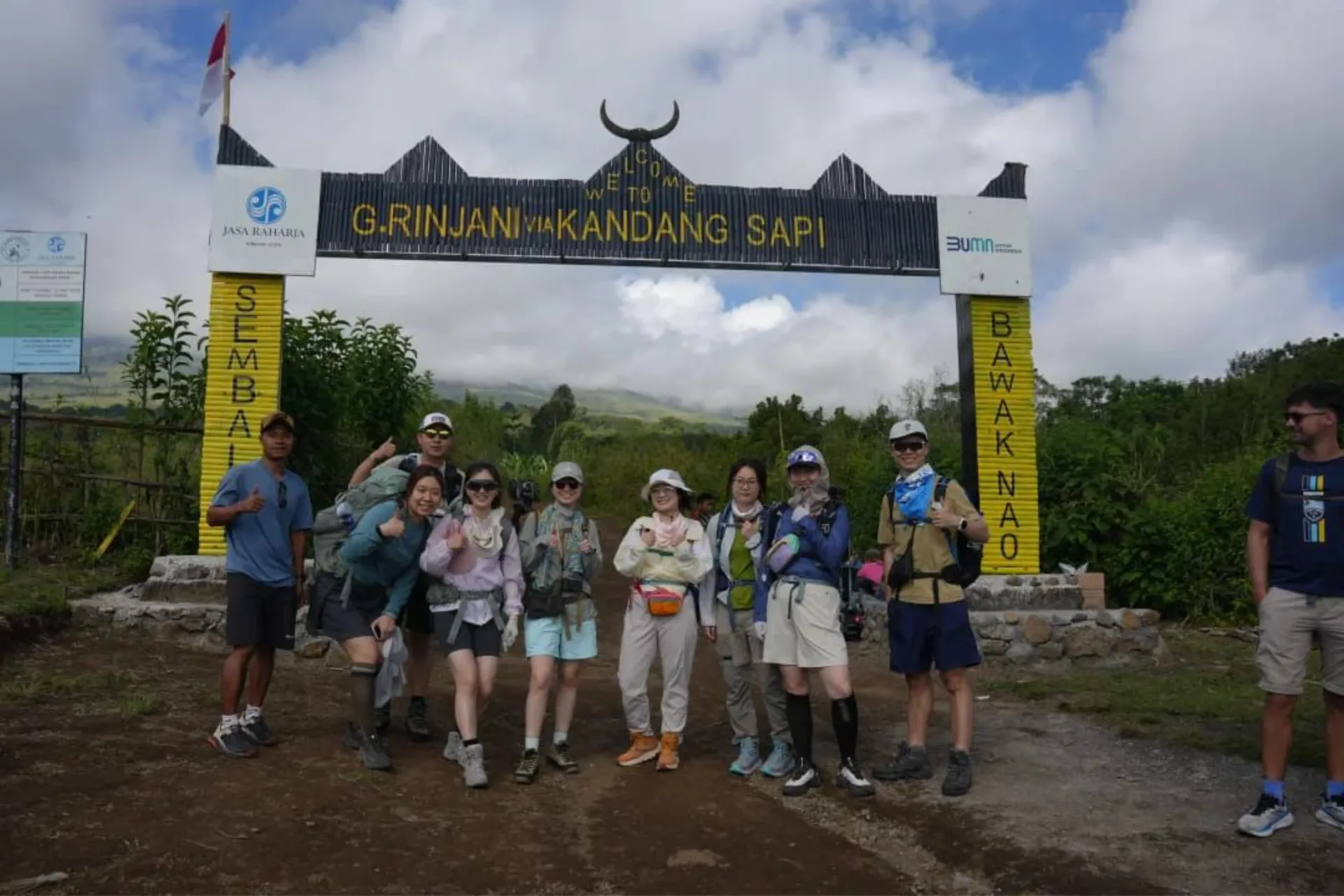
- Day 1: Trek from Sembalun Lawang (village) to the Sembalun crater rim (Pelawangan Sembalun). This is a long day of trekking, but it positions you for the summit attempt. You'll camp at the rim.
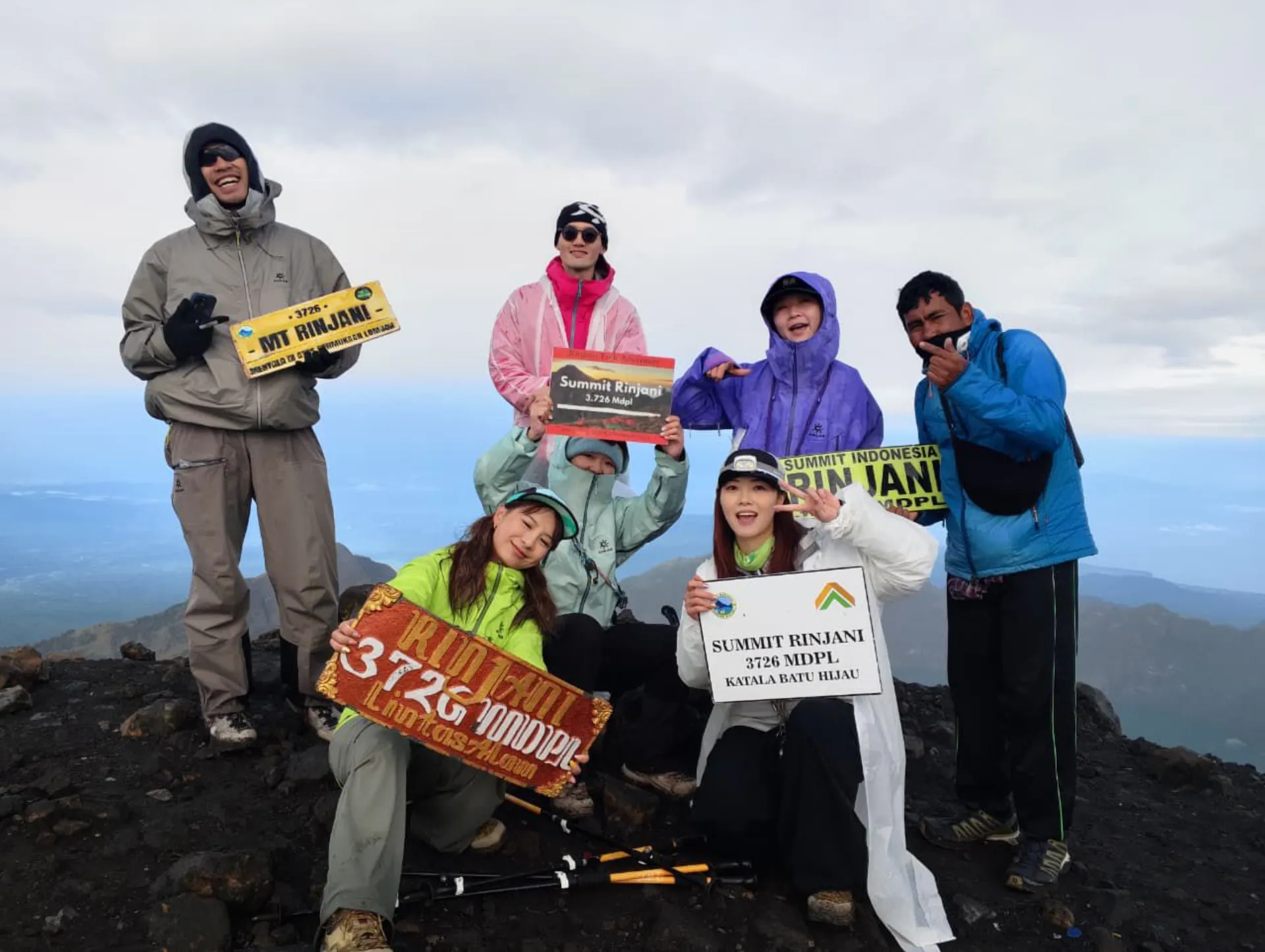
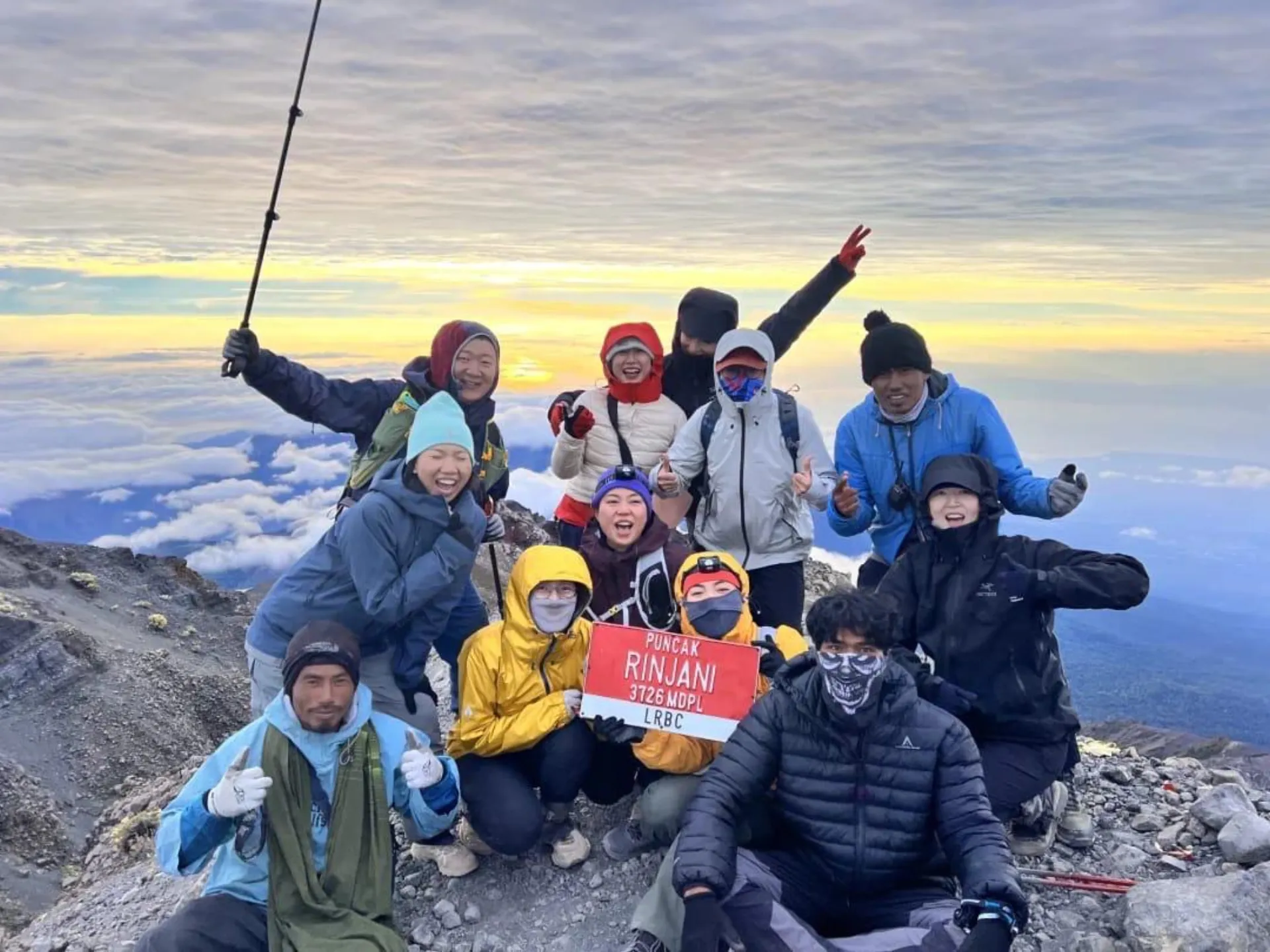
- Day 2: An extremely early start (around 2:00 AM) for the summit push. After reaching the summit, you will descend back to Sembalun Lawang on the same day. This is an exceptionally long and tiring day.
Is the 2-Day Rinjani Summit Trek Worth It?
While technically possible via the Sembalun route, the 2-day Rinjani summit trek is a race against time and fatigue. Here's what you need to consider:
Pros of a 2-Day Trek:
- Time Efficiency: Ideal for those with very limited time.
- Sense of Accomplishment: Conquering Rinjani in such a short period offers a unique bragging right.
Cons of a 2-Day Trek:
- Extreme Fatigue: You will be constantly on the move with minimal rest.
- Health Risks: Dehydration, exhaustion, and altitude sickness are amplified risks.
- Limited Enjoyment: Little to no time for appreciating the caldera, Segara Anak lake, hot springs, or the sunrise from the crater rim.
- Safety Concerns: Reduced awareness due to exhaustion can increase the risk of accidents.
- Not Recommended for Beginners: This is an advanced-level trek.
Expert Tips for a 2-Day Rinjani Summit Attempt (Sembalun Route)
If you are determined to embark on this challenging adventure, follow these expert recommendations:
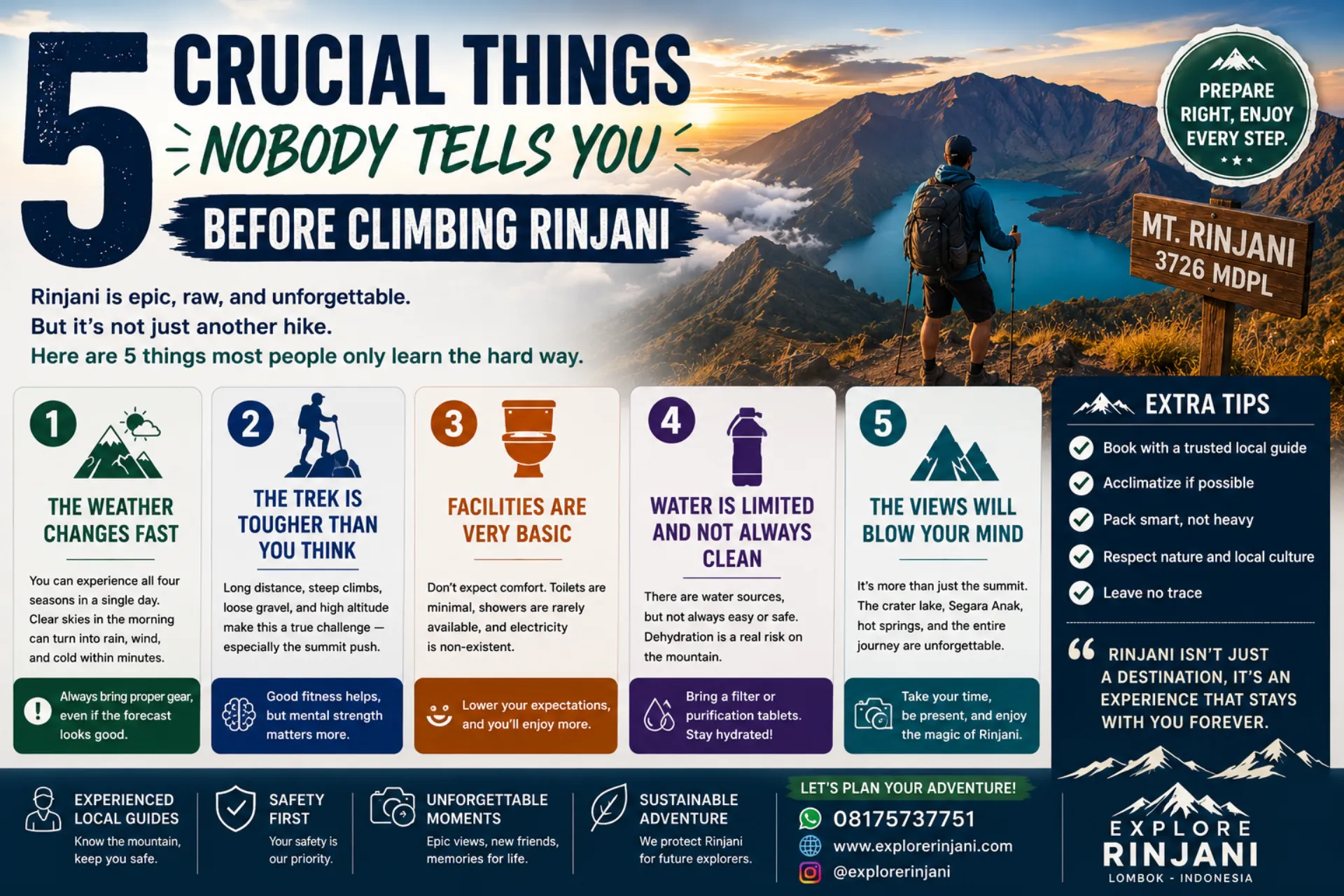
- Physical Preparation: Train rigorously for months beforehand. Focus on cardiovascular fitness, strength training (especially legs), and endurance.
- Acclimatization: If possible, spend a day or two in the Lombok area at a lower altitude to help your body adjust.
- Hire a Reputable Guide and Porter Service: This is non-negotiable for safety and logistics. They are experienced with the mountain and can assist in emergencies. Ensure they are aware of your 2-day goal.
- Hydration is Key: Drink plenty of water before, during, and after the trek. Consider water purification tablets or a filter.
- Nutrition: Carry high-energy snacks and ensure your guide provides adequate, nutritious meals.
- Layered Clothing: Be prepared for extreme temperature changes, from tropical heat to freezing summit conditions.
- Essential Gear:
- Warm sleeping bag
- Headlamp with extra batteries
- Trekking poles (highly recommended for the scree)
- Sturdy, broken-in hiking boots
- Warm hat and gloves
- Sun protection (hat, sunglasses, sunscreen)
- Rain gear
- First-aid kit
- Start Early, Very Early: The summit push begins in the dead of night.
- Listen to Your Body: If you feel unwell or overly exhausted, do not push yourself to the summit. Your safety is paramount.
- Manage Expectations: Be prepared for a grueling experience rather than a leisurely hike.
When is the Best Time to Trek Rinjani?
The dry season, generally from April to November, is the best time to trek Rinjani. During this period, trails are less slippery, and visibility is typically clearer. The rainy season (December to March) can make the trails dangerous and significantly increase the difficulty of any trek.
Conclusion: Summit in 48 Hours? Yes, but with Caveats.
So, can you really summit Rinjani in 48 hours? Yes, but only via the Sembalun route, and only if you are an exceptionally fit and experienced trekker. The Senaru route is not a viable option for a 2-day summit attempt. This condensed trek is a test of endurance, demanding meticulous preparation and a strong resolve. For most, a 3-day or 4-day trek offers a more balanced and enjoyable experience of Rinjani's unparalleled beauty.
If time is your absolute constraint and you possess the necessary fitness, the Sembalun 2-day summit trek can be an unforgettable achievement. However, always prioritize safety, listen to your guides, and understand the immense physical and mental demands involved. For a more immersive Rinjani experience, consider extending your trek to fully appreciate the magic of this sacred mountain.
Ready to plan your Rinjani adventure? Research reputable tour operators and prepare yourself for an incredible journey, whether it's a swift summit push or a more leisurely exploration.