Mount Rinjani: How Much Cash to Bring for Your Trek
Mount Rinjani, Lombok's majestic volcano standing at an impressive 3,726 meters above sea level, offers an unforgettable trekking experience. Whether you're embarking on a challenging 2-day ascent or a more leisurely 4-day exploration, proper preparation is key. One of the most common questions trekkers have is: "How much cash should I bring for my Rinjani trek?" This isn't just about covering the tour package; it involves understanding tipping customs, budgeting for unexpected extras, and having a safety net for emergencies.
This comprehensive guide will break down the essential cash considerations for your Rinjani adventure, ensuring you're well-prepared and can focus on the breathtaking scenery rather than financial worries.
Understanding the Costs: What Your Trek Package Typically Includes
Before we dive into cash, it's important to know what your Rinjani tour package generally covers. Most reputable tour operators will include:
- Permits and entrance fees to Mount Rinjani National Park.
- Transportation to and from the trekking starting point (e.g., Sembalun or Senaru).
- Accommodation before and after the trek (often at a basic guesthouse).
- All meals during the trek (typically breakfast, lunch, and dinner).
- Camping equipment (tents, sleeping bags, sleeping mats).
- A licensed and experienced trekking guide.
- Porters to carry group equipment and food supplies.
While the tour package covers the essentials, cash is vital for elements not included and for showing appreciation to your trekking team.
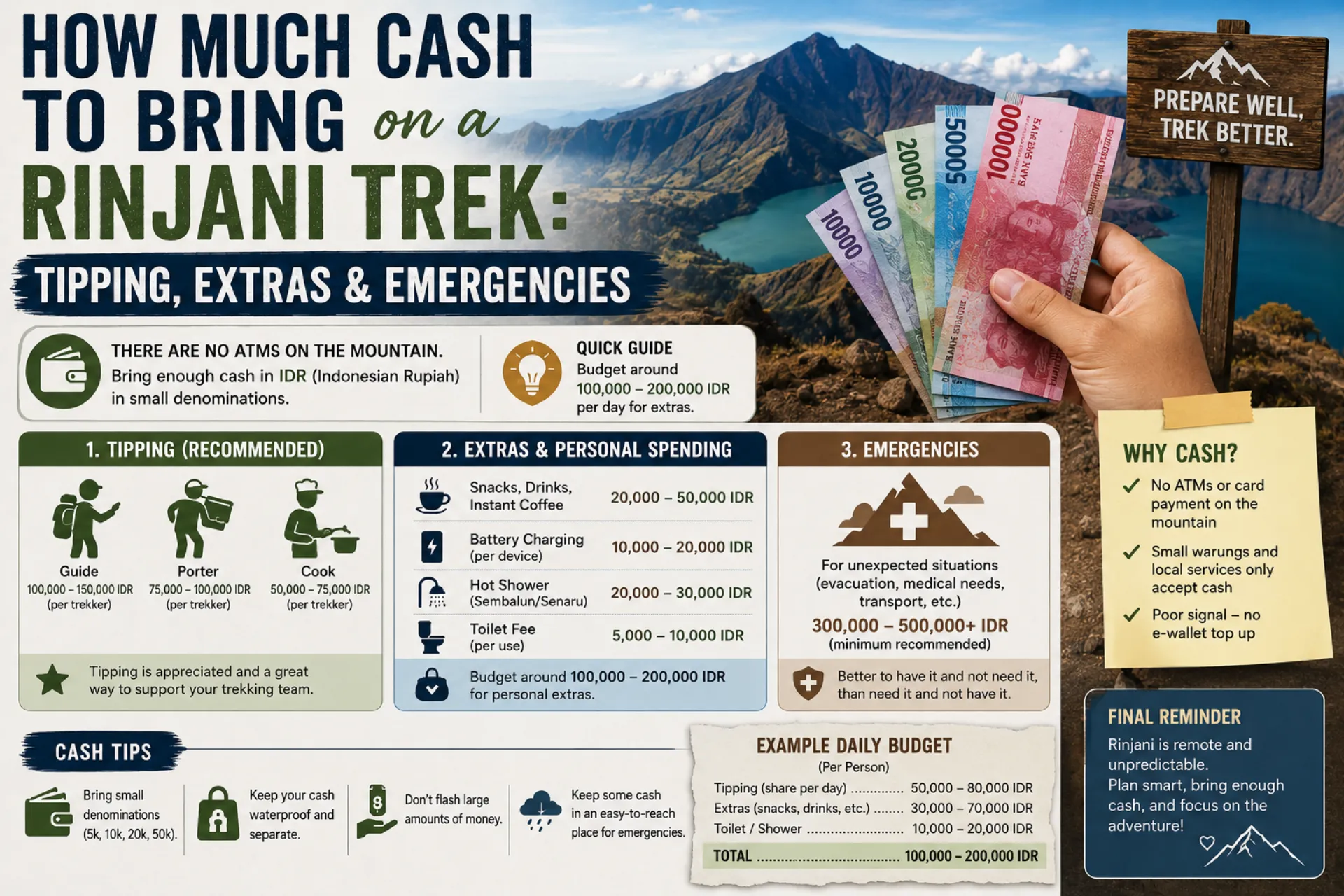
Tipping Your Rinjani Guides and Porters: A Crucial Consideration
Tipping is a customary and highly appreciated gesture for your guides and porters in Indonesia, and Mount Rinjani is no exception. These individuals work incredibly hard to ensure your safety and comfort throughout the challenging trek. Their expertise, physical exertion, and dedication are invaluable.
Recommended Tipping Amounts
The exact amount can vary based on the tour operator, the length of your trek, and the quality of service received. However, here are some generally accepted guidelines:
- Guides: A typical tip for a guide ranges from Rp 200,000 to Rp 500,000 (approximately $13 - $33 USD) per trekker for a 2-3 day trek. For longer or more demanding treks, you might consider tipping at the higher end of this range or slightly more.
- Porters: Porters carry the bulk of the load, including tents, food, and cooking equipment. A common tipping range for porters is Rp 150,000 to Rp 300,000 (approximately $10 - $20 USD) per trekker for a 2-3 day trek. It's often practical to pool money for tipping the porter team.
Expert Tip: Many trekkers find it easiest to pool their money and give a collective tip to the guide at the end of the trek, who can then distribute it amongst the porter team. Discuss this with your guide beforehand if you prefer to tip individuals directly.
Factors influencing tip amounts:
- Trek Duration: Longer treks warrant higher tips.
- Group Size: If you're in a large group, the individual tip might be slightly less, but the total amount for the team will be higher.
- Service Quality: Exceptional service, going above and beyond, can be recognized with a more generous tip.
- Personal Budget: While guidelines exist, ultimately, tip what you feel is appropriate and what your budget allows.
Essential Extras: What Else Will You Need Cash For?
Beyond tips, several other expenses on your Rinjani trek will require cash:
1. Drinks and Snacks
While meals are provided, you might want to purchase extra bottled water, soft drinks, coffee, tea, or energy snacks at the base camp before you start or at designated points during the trek if available (though options are limited and prices can be inflated). Bringing your own snacks is also a good idea.
- Estimated Budget: Rp 100,000 - Rp 300,000 (approx. $7 - $20 USD) per person.
2. Souvenirs and Local Crafts
If you pass through local villages like Sembalun or Senaru before or after your trek, you might want to buy souvenirs. These can range from sarongs and wood carvings to local spices. Bargaining is common, so having cash handy is essential.
- Estimated Budget: Highly variable, but perhaps Rp 200,000 - Rp 500,000 (approx. $13 - $33 USD) if you plan to buy a few items.
3. Personal Expenses and Small Purchases
This could include things like:
- A hot shower or basic facilities at a guesthouse before or after your trek (sometimes an extra charge applies).
- Tips for drivers if you arrange separate transport.
- Donations to local communities or temples if you encounter any.
- Purchasing local SIM cards or top-ups if needed.
- Estimated Budget: Rp 100,000 - Rp 200,000 (approx. $7 - $13 USD).
Emergency Fund: The Importance of a Safety Net
While you hope not to use it, having an emergency fund in cash is paramount for any trek, especially one as challenging as Mount Rinjani.
What Could an Emergency Fund Cover?
- Unexpected Medical Expenses: Though rare, if you experience a minor injury that requires immediate attention or medication not provided by your guide, cash is needed.
- Emergency Evacuation: In severe cases, you might need to arrange for faster, private evacuation if your insurance doesn't cover it or if immediate payment is required.
- Last-Minute Transportation: If your planned transport falls through or you need to leave earlier than scheduled due to unforeseen circumstances.
- Additional Accommodation: If you need to stay an extra night somewhere unexpectedly.
Recommendation: Aim to have at least Rp 1,000,000 - Rp 2,000,000 (approx. $65 - $130 USD) set aside specifically for emergencies. This amount can provide peace of mind.
How Much Cash Should You Bring in Total? A Recommended Breakdown
Let's consolidate the recommendations for a standard 2-3 day Rinjani trek per person:
- Tipping Guides: Rp 200,000 - Rp 500,000
- Tipping Porters: Rp 150,000 - Rp 300,000
- Extras (Drinks, Snacks, Souvenirs, Personal): Rp 400,000 - Rp 1,000,000
- Emergency Fund: Rp 1,000,000 - Rp 2,000,000
Total Recommended Cash: Rp 1,750,000 - Rp 3,800,000 (approximately $115 - $250 USD) per person.
This is a guideline, and you should adjust it based on your personal spending habits, the length of your trek, and your comfort level with financial risk.
Important Tips for Carrying and Managing Cash
- Carry Enough Small Denominations: While large notes are useful for exchange, having plenty of Rp 5,000, Rp 10,000, Rp 20,000, and Rp 50,000 notes will be incredibly helpful for tipping and small purchases.
- Keep Cash Secure: Use a money belt or a secure pouch. Never keep all your cash in one place.
- Inform Your Bank: Let your bank know your travel dates and destination to avoid any issues with your ATM or credit cards.
- ATMs are Limited: ATMs are available in Lombok's main towns (like Mataram or Senggigi) but are scarce or non-existent in the trekking areas. Change money before you arrive at the trekking base.
- Credit Cards are Rarely Accepted: Credit cards are generally not accepted for trek payments, tips, or purchases in the remote areas surrounding Rinjani.
- Exchange Rates: Exchange rates can fluctuate. It's wise to check current rates before your trip.
When to Go and What to Pack (Briefly)
The best time to trek Mount Rinjani is during the dry season, typically from April to November. This period offers the clearest skies and safest conditions. Ensure you pack essentials like sturdy hiking boots, warm clothing, rain gear, sunscreen, a headlamp, and a reusable water bottle. For specific gear recommendations, consult your tour operator.
Conclusion: Be Prepared, Be Adventurous!
Mount Rinjani is a spectacular destination that rewards every ounce of effort. By understanding the financial aspects, particularly how much cash to bring for tipping, extras, and emergencies, you can ensure a smoother, more enjoyable, and safer journey. Pack wisely, embrace the adventure, and prepare to be amazed by the raw beauty of Lombok's iconic volcano!